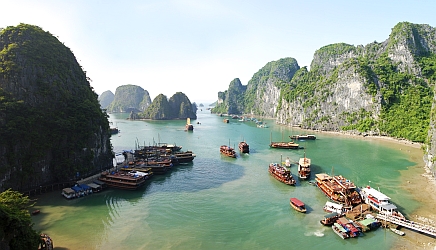
A Journey Through Vietnam: A Land of Endless Discovery Vietnam, a land of staggering natural beauty and cultural complexities, is one of Southeast Asia’s most compelling destinations. A tour of Vietnam is an unforgettable journey through a land of striking contrasts and profound beauty. Every corner of the country offers a unique experience and a deeper understanding of its rich cultural heritage. With a history marked by heroic struggles and an enduring spirit, this S-shaped country enchants visitors with its vibrant cities, serene countryside, and rich heritage. This enchanting country, resilient and ever-evolving, promises an adventure that will leave a lasting impression on every traveler. Landscapes: A Natural Symphony Vietnam’s landscapes are a harmonious blend of lush mountains, fertile deltas, pristine beaches, and dense forests. The north is dominated by the rugged peaks of the Tonkinese Alps, home to Sapa and its iconic terraced rice fields. These terraces, sculpted by the Hmong and Dao ethnic minorities, form a patchwork quilt of green and gold that changes with the seasons, offering breathtaking views and challenging treks. The country’s coastline, stretching over 3,000 kilometers, features some of the world’s most beautiful beaches and bays. Ha Long Bay, a UNESCO World Heritage Site, is famed for its emerald waters and thousands of limestone karsts and isles in various shapes and sizes. One can explore hidden caves, floating fishing villages, and secluded lagoons through this otherworldly seascape. Central Vietnam boasts the spectacular Phong Nha-Ke Bang National Park, another UNESCO site known for its vast network of caves, including Son Doong, the world’s largest cave. The region’s coastline is dotted with charming towns like Hoi An, with well-preserved ancient architecture and lantern-lit streets, and Da Nang, known for its sandy beaches and the Marble Mountains. In the south, the Mekong Delta spreads in a labyrinth of rivers, swamps, and islands. Life in this lush region revolves around the water, with floating markets, rice paddies, and fruit orchards painting a vivid picture of rural Vietnam. The delta’s waterways are best explored by boat, offering a glimpse into the traditional way of life that has persisted for centuries. History: A Chronicle of Resilience Vietnam’s history is a complex tapestry of dynastic rule, colonialism, and revolutionary struggle. The country’s earliest known civilization, Dong Son culture, dates back to the Bronze Age, leaving intricate drums and other artifacts behind. Over the millennia, various dynasties ruled Vietnam, each contributing to its cultural and architectural heritage. The Chinese domination, lasting over a thousand years, profoundly influenced Vietnamese culture, particularly in areas like Confucianism, governance, and literature. Despite this long period of control, the Vietnamese maintained a strong sense of identity and resistance, eventually gaining independence in the 10th century under the Ly and Tran dynasties. The arrival of the French in the 19th century marked the beginning of colonial rule, transforming Vietnam’s social, economic, and architectural landscape. French influence is evident in cities like Hanoi and Ho Chi Minh City, where tree-lined boulevards, grand buildings, and baguettes are part of the everyday scene. The struggle for independence from French colonial rule culminated in the First Indochina War, leading to the establishment of the Democratic Republic of Vietnam in 1954. The Vietnam War, known locally as the American War, was a defining chapter in the nation’s history. The conflict, which pitted the communist north against the US-backed South, left deep scars but also demonstrated the resilience and determination of the Vietnamese people. Sites such as the Cu Chi Tunnels and the War Remnants Museum in Ho Chi Minh City offer sobering insights into this tumultuous period. Culture: A Tapestry of Traditions Vietnamese culture is a rich mosaic of influences, reflecting the country’s diverse ethnic groups and historical experiences. It is deeply rooted in traditions yet constantly evolving, blending ancient practices with modern trends. One of the most significant aspects of Vietnamese culture is its cuisine, renowned for its balance of flavors, freshness, and use of herbs and vegetables. Dishes like pho (noodle soup), banh mi (sandwich), and goi cuon (spring rolls) have gained international fame. Each region has its culinary specialties, from the hearty noodle soups of the north to the spicy dishes of the central region and the sweet flavors of the south. Traditional festivals play a crucial role in Vietnamese culture, with Tet, the Lunar New Year, being the most important. This festival is a time for family reunions, ancestral worship, and various customs meant to bring good luck for the coming year. Other notable festivals include the Mid-Autumn Festival, celebrated with lanterns and mooncakes, and the Hung Kings’ Temple Festival, which honors the legendary founders of Vietnam. Art and literature have long been integral to Vietnamese culture, with water puppetry being a unique and enchanting art form that dates back over a thousand years. This traditional performance from the Red River Delta involves wooden puppets dancing on water, accompanied by live music and storytelling. Vietnam’s ethnic diversity is reflected in its cultural practices and traditional clothing. The ao dai, a graceful long tunic worn over trousers, is the national dress that symbolizes Vietnamese women’s elegance. In the highlands, each ethnic group has its distinctive costumes, often adorned with intricate embroidery and vibrant patterns. Cities: Vibrant and Varied Vietnam’s cities are as diverse as its landscapes, each offering a unique window into the country’s culture and history. Hanoi, the capital, is a city of contrasts, where centuries-old temples and narrow alleys of the Old Quarter coexist with modern skyscrapers and bustling markets. The city’s rich history is evident in landmarks like the Temple of Literature, Vietnam’s first university, and the Ho Chi Minh Mausoleum, where the nation’s revered leader lies in state. Ho Chi Minh City, formerly Saigon, is the economic powerhouse of Vietnam. This dynamic metropolis is known for its energetic pace, vibrant nightlife, and colonial architecture. The city’s French colonial landmarks include Notre-Dame Cathedral, built entirely of materials imported from France, and the Central Post Office, designed by Gustave Eiffel. Hue, the former imperial capital, offers a glimpse into Vietnam’s royal past. The city’s historic citadel, with its palaces, temples, and tombs, is a UNESCO World Heritage Site and a testament to the grandeur of the Nguyen Dynasty. The Perfume River flows through Hue and adds to the city’s romantic and serene atmosphere. Hoi An, a well-preserved trading port, is another UNESCO World Heritage Site renowned for its charming streets, traditional wooden houses, and lantern-lit evenings. The town’s multicultural heritage is reflected in its architecture, which combines Vietnamese, Chinese, Japanese, and French influences. Is it worth combining Cambodia with a tour of Vietnam? Combining Cambodia with a Vietnam tour is worth considering for a more enriching and diverse travel experience. These neighboring countries, each with its own distinct history, culture, and landscapes, complement each other beautifully, offering travelers a comprehensive glimpse into Southeast Asia. Vietnam captivates with its bustling cities, serene countryside, and stunning natural wonders. From the historic streets of Hanoi and the breathtaking beauty of Ha Long Bay to the vibrant markets of Ho Chi Minh City and the lush Mekong Delta, Vietnam provides a rich tapestry of experiences. Adding Cambodia to your itinerary enhances this journey by introducing a different, yet equally fascinating, cultural and historical context. Cambodia is home to the majestic Angkor Wat, one of the most significant archaeological sites in the world. This ancient temple complex is a must-see with its intricate carvings and towering spires. The capital city, Phnom Penh, offers insight into the country’s recent history with sites like the Royal Palace and the sobering Tuol Sleng Genocide Museum. Additionally, Cambodia’s countryside, with its rice paddies, floating villages, and friendly locals, offers a serene contrast to the urban centers. The two countries’ proximity makes travel between them convenient, often involving short flights or overland routes. This combination allows travelers to experience a broader spectrum of Southeast Asian culture and history within a single trip, making it an advantageous option. When is the Best Time to Tour Vietnam? The best time to tour Vietnam depends on the region and the type of experience you seek. Generally, the country experiences a tropical monsoon climate with significant regional variations. For the north, including Hanoi and Ha Long Bay, the ideal time is from October to April when the weather is cool and dry, with temperatures ranging from 15°C to 25°C. Central Vietnam, encompassing cities like Hue, Hoi An, and Da Nang, is best visited between February and August. The weather is warm and sunny during this period, perfect for exploring historic sites and beaches. The dry season from December to April is preferable in the south, including Ho Chi Minh City and the Mekong Delta. Temperatures hover between 25°C and 35°C, making it ideal for outdoor activities and river cruises. However, for those interested in experiencing Vietnam’s lush, green landscapes, the rainy season from May to November can be appealing despite occasional heavy showers. Festivals also influence the best time to visit. Tet, the Lunar New Year, usually falls between late January and February, offering vibrant cultural experiences, though it can be crowded and many businesses close during the celebrations. Ultimately, the best time to tour Vietnam aligns with your regional interests and desired activities. Is Vietnam Suitable for Senior Travelers? Vietnam is indeed suitable for senior travelers, offering a diverse range of experiences that cater to different interests and activity levels. The country’s rich history, cultural heritage, and stunning landscapes can be enjoyed at a comfortable pace. Major cities like Hanoi and Ho Chi Minh City provide modern amenities, accessible transport options, and a variety of guided tours, ensuring convenience and ease of travel. For those interested in history and culture, sites such as the ancient town of Hoi An, the Imperial City of Hue, and numerous museums and temples offer enriching experiences without the need for strenuous activity. Scenic boat cruises in Ha Long Bay or the Mekong Delta allow for a leisurely exploration of Vietnam’s natural beauty. Vietnamese hospitality and the growing focus on tourism infrastructure mean plenty of comfortable accommodations, from luxury hotels to quaint homestays, providing excellent service. While some rural areas may present challenges in terms of accessibility, the overall welcoming atmosphere, combined with a variety of travel services catering to different needs, makes Vietnam a great destination for senior travelers seeking adventure and cultural immersion. Organized Kosher Group Tour to Vietnam An organized Kosher group tour to Vietnam offers a unique and culturally immersive travel experience tailored to those observing Kashrut. These specialized tours ensure that all meals adhere strictly to kosher guidelines, giving participants peace of mind while exploring this captivating country. The tours often include a mix of historical, cultural, and natural attractions, providing a comprehensive overview of Vietnam’s rich heritage and stunning landscapes. Participants can visit iconic sites such as Ha Long Bay, where they can enjoy a scenic boat cruise amidst towering limestone karsts, or explore the ancient town of Hoi An with its well-preserved architecture and bustling markets. In cities like Hanoi and Ho Chi Minh City, guided tours cover significant landmarks such as the Ho Chi Minh Mausoleum, the War Remnants Museum, and the vibrant local markets, all while ensuring access to kosher meals. These tours often include Shabbat services and kosher dining options, ensuring a comfortable and spiritually enriching experience. Accommodations are chosen with care, offering modern amenities and convenient locations. Knowledgeable guides provide insights into Vietnam’s history, culture, and Jewish heritage, making the journey both educational and enjoyable. This combination of cultural immersion and religious observance makes a kosher group tour an ideal way to experience the best of Vietnam.