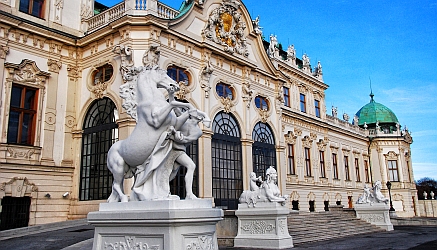
Vienna: A Symphony of History, Culture, and Timeless Elegance When choosing travel destinations in Europe, a tour to Vienna is an excellent option. Vienna is a city that moves gracefully in time, like a Strauss waltz circling through centuries of art, faith, memory, and elegance. We come for the palaces and stay for the cafés; we arrive curious and leave enriched by music, history, and the warmth of lived tradition. Set along the Danube and framed by vineyards and the Vienna Woods, the city blends Baroque grandeur with modern creativity, offering travelers of every background (religious, secular, cultural explorers, families, and groups) a richly layered experience. Vienna lives in layers: imperial elegance, musical genius, café table debates, and the resilient spirit of communities that rebuilt after devastation. Whether we come to study art, trace Jewish roots, enjoy waltz season, or travel observantly in a kosher framework, the city meets us with grace. Pair Vienna with Prague, Bratislava, and Budapest for a sweeping Central European journey, or linger in its boulevards and courtyards, letting time slow to the measured turn of a waltz. When we travel here, we do not simply look at history, but we walk through it, taste it, and carry it forward. In the following guide, we will delve into Vienna’s top attractions, explore the powerful narrative of Jewish Vienna (past and present), and provide practical tips for religiously observant travelers, including kosher dining, Shabbat planning, and heritage experiences. We will also look beyond Vienna to nearby Central European cities of Prague, Bratislava, and Budapest. A Glimpse into Vienna’s Rich History Vienna’s history begins long before emperors and concert halls. The Romans established the frontier military camp Vindobona along the Danube, laying the foundations of a settlement that would grow in strategic and cultural importance. By the Middle Ages, Vienna had become a fortified town closely tied to the emergent Babenberg dynasty. Later, the Habsburgs transformed Vienna into the beating heart of Central European power. For centuries, the city served as capital of the Habsburg Monarchy and, later, the Austro-Hungarian Empire, one of history’s great multi-ethnic realms. The Baroque era left its mark on opulent palaces, churches, and courtly institutions. The 18th and 19th centuries ushered in Vienna’s golden age of music and intellectual life: Mozart premiered works here; Beethoven wrestled with form and emotion; the Strauss family gave the city its waltz; and salons buzzed with thinkers, writers, and patrons. The Ringstrasse development of the 19th century replaced medieval walls with a monumental boulevard—an urban statement of confidence and cultural ambition. The early 20th century brought modernism, psychoanalysis, and the ferment of new artistic movements, alongside political upheaval, war, and the tragedies of fascism and the Holocaust. Post–World War II reconstruction and decades of cultural investment helped Vienna reemerge as one of Europe’s most livable and artistically active cities. Today, when we walk its streets, we trace layers of empire, innovation, suffering, renewal, and enduring beauty. Architectural Splendor: Where Baroque Meets Modern Vienna is an open-air architecture museum. Within a morning’s walk, we can move from medieval alleys in the Innere Stadt to high Baroque façades, neo-Renaissance cultural monuments, and Secession-era modernism. The city’s visual narrative reveals who wielded power, who commissioned art, and how Vienna reinvented itself across empires and ideologies. Architecture in Vienna is not museum-quiet. Instead, it is functional, lived-in, layered, and often wonderfully theatrical. Give yourself time to look up. Culture & Atmosphere: Vienna’s Living Rhythm Vienna breathes culture. Music drifts from rehearsal halls, street performers fill plazas, and posters announce festivals, opera seasons, and gallery openings. We feel the city’s rhythm most vividly in its performance spaces and its coffeehouses – social institutions where ideas percolated as richly as the espresso. Music City: Attend a performance at the Vienna State Opera or the Musikverein, home of the Vienna Philharmonic’s famed New Year’s Concert. In Vienna, chamber recitals echo in churches, waltz balls light up winter, and open-air concerts animate summer nights. Museums & Galleries: With well over 100 museums, Vienna rewards curiosity. The Kunsthistorisches Museum dazzles with its collection of Old Masters; the Albertina bridges the gap between prints, Impressionism, and modern art; the Leopold Museum anchors the MuseumsQuartier with works by Schiele and the Klimt era. Coffeehouse Culture: Part salon, part living room, part time capsule — Viennese cafés invite us to linger. Order a Wiener Melange, pair it with Sachertorte or Apfelstrudel, and watch the city glide by. Laptops hum beside chessboards and marble-topped tables where generations of writers once scribbled manifestos. Seasonal Vienna: Advent markets glow in December; classical ball season sweeps January–February; spring brings Easter music and green parks; summer spills onto outdoor terraces along the Danube Canal; autumn concert series and wine taverns (Heurige) in the nearby vineyards round out the year. Jewish History & Heritage in Vienna For travelers interested in exploring Jewish history and heritage, a trip to Vienna is a recommended destination when touring Europe. Jewish life in Vienna stretches back to medieval settlement, endured expulsions, flourished in the 19th century, and suffered near destruction under Nazism, yet today lives again with resilience and creativity. Understanding Jewish Vienna adds significant depth to any visit, whether you are part of the community or not. Medieval Roots & Early Communities Records show Jewish presence in Vienna as early as the 12th century. Medieval Jewish quarters formed near today’s Judenplatz, where scholars and merchants contributed to the city’s growth. Periods of tolerance alternated with taxation, restriction, and expulsion. Synagogues were destroyed more than once across the centuries. Enlightenment, Emancipation & the Golden Age By the late 18th and especially the 19th century, parallel to broader imperial reforms, Jewish communities gained increased civil rights. Vienna’s Jewish population expanded rapidly, becoming an integral part of the city’s professional, commercial, and intellectual elite. Some of the most influential figures in music, psychology, literature, journalism, and finance were Jewish or of Jewish descent: Sigmund Freud, Gustav Mahler, Arnold Schoenberg, Stefan Zweig, and numerous patrons, publishers, and thinkers who contributed to Viennese modernism. The Shoah Catastrophe and Renewal After 1945 Austria’s annexation to Nazi Germany in 1938 (the Anschluss) unleashed persecution: property seizures, humiliation, deportations, and mass murder. Most of Vienna’s Jews were forced to flee, and those who could not were deported to ghettos and camps. Memorials across the city recall these losses, and exploring them is a powerful act of remembrance. A small remnant returned, and over decades, Jewish institutions rebuilt: synagogues reopened, schools were founded, and museums began documenting centuries of Jewish life in Austria. Today, Vienna hosts one of Europe’s most vibrant Jewish communities, with a rich religious, cultural, and educational infrastructure serving both locals and visitors. Key Jewish Heritage Sites in Vienna * Jewish Museum Vienna – Dorotheergasse: Core exhibitions trace Jewish life from medieval times through modern Vienna, with ritual objects, documents, and multimedia storytelling. * Jewish Museum Vienna – Judenplatz: Built atop the archaeological remains of a medieval synagogue; includes a moving interpretation of the medieval community and the Judenplatz Holocaust Memorial by Rachel Whiteread — a stark “Nameless Library” in stone. * Stadttempel Synagogue: The main synagogue that survived the 1938 pogroms because surrounding buildings protected it from fire. Today, it remains an active congregation and a touchstone of continuity. * Zentralfriedhof (Central Cemetery) – Jewish Sections: Monumental graves of leading figures reflect the prominence of Vienna’s Jewish bourgeoisie. Visiting offers both historical insight and a contemplative experience. * Shoah Memorials & Stolpersteine: Scattered across sidewalks and public squares, brass “stumbling stones” name victims and bring memory into daily life. The Guide for the Religious Traveler in Vienna: Tips & Recommendations Vienna is a welcoming destination for religiously observant Jewish travelers, with established institutions, kosher food access, and organized community support. Planning ahead, especially for Shabbat and kashrut, will make your stay smoother. Below are practical insights to help us travel comfortably while maintaining observance. With planning, Vienna becomes not only accessible but spiritually and communally rewarding for religious travelers. 1. Community & Contacts Vienna’s organized Jewish community (often referred to as the IKG Wien – Israelitische Kultusgemeinde Wien) serves as an umbrella for synagogues, schools, and communal services. Before arrival, check the community website or contact their visitor information line for up-to-date details on security procedures, service times, and registration requirements for synagogue entry. 2. Synagogues & Prayer Services * Stadttempel is the primary historic synagogue and often the first stop for visitors. Because its security is tight, remember to bring an ID and arrange in advance if you plan to attend services. * Additional orthodox and smaller congregations exist in various districts. Ask the community office for current minyanim, Nusach differences, and women’s sections. * Travelers during Yom Tov or High Holidays should reserve seating early. 3. Kosher Food in Vienna * Kosher Supermarkets & Bakeries: Several community-run or supervised shops offer packaged goods, fresh challah, deli items, and take-away meals. Availability may vary by season. Confirm opening hours, especially on Fridays and Erev Chag. * Kosher Restaurants & Cafés: Expect a mix of meat, dairy, and pareve establishments—Middle Eastern grills, Israeli-style dairy cafés, and European-influenced menus. Some require reservations. Always ask about kashrut certification and current supervision. * Accommodation Workaround: If staying in a mainstream hotel, you can pre-arrange sealed kosher meals (double-wrapped) through local providers or your tour operator. 4. Shabbat in Vienna * Walkable Base: Choose lodging within walking distance of the synagogue you plan to attend; Vienna’s districts are manageable, but distances add up. * Electric Doors & Keys: Many European hotels use keycards or motion-triggered doors. Request manual keys or coordinate with staff for Shabbat-friendly access. * Shabbat Meals: Community centers, kosher restaurants (by pre-booking), or organized group tours often arrange communal Friday night and Shabbat lunches. Booking early is essential, particularly in peak travel months. 5. Security Awareness Due to heightened security at Jewish institutions across Europe, expect to undergo ID checks and have controlled entry. Arrive early for services or museum visits connected to the community. This security procedure is standard and helps protect everyone. 6. Jewish Learning & Heritage Programming Look for walking tours of Jewish Vienna, lectures, or temporary exhibitions timed to Jewish holidays or historical commemorations. These programs enrich the visit and connect us to local life. 7. Travel Tech & Prep Checklist * Print or locally store PDF kosher certification lists (hashgacha) in case internet access is limited. * Confirm the time of candle lighting and havdalah in Vienna for your travel dates. * Carry a universal power adapter. Practical Travel Tips (Quick Reference) · Best time to visit Vienna: April–June and September–December (holiday markets!) · Suggested stay in Vienna: 3–5 full days; longer if adding day trips to the Wachau Valley, Bratislava, or Vienna Woods. · Airport & Transportation: Vienna International Airport (VIE) is conveniently connected to the city via CAT train, S-Bahn, or taxi. Public transit (U-Bahn, trams, and buses) is efficient and clean. · Language: German is an official language; English is widely understood in tourism zones. · Money: Euro (EUR). Cards are widely accepted; carry some cash for markets and small bakeries. · Dress code for religious sites: Modest attire is recommended in churches and required in synagogues; head coverings are often provided, but it is best to bring your own kippah. Beyond Vienna: Linking Prague, Bratislava, & Budapest Vienna sits at the geographic and historical crossroads of Central Europe, making it an ideal anchor for a multi-city journey that traces imperial, cultural, and Jewish heritage threads across borders. Rail and coach connections are efficient: Prague is roughly 4–5 hours by train, Bratislava is under 1 hour, and Budapest is about 2.5–3 hours. These short hops create a natural circuit through four capitals — Prague, Vienna, Bratislava, and Budapest — each with its own Jewish story, architectural identity, and culinary accent. Why Combine These Cities? * Shared Imperial Past: All four cities were shaped, directly or indirectly, by Habsburg influence. A trip that combines several of Central Europe’s capital cities offers a more comprehensive, profound, and enjoyable experience. * Jewish Heritage Corridor: From Prague’s preserved ghetto quarter to Budapest’s Great Synagogue and Vienna’s rebuilt community, the route offers a powerful arc of Jewish continuity, tragedy, and renewal. * Efficient Travel Logistics: Distances are short, trains are comfortable, and group transfers can turn border crossings into seamless travel days. The Benefits of Choosing a Kosher Group-Tour If you’re considering the region, an organized kosher tour linking Vienna, Prague, Bratislava & Budapest delivers depth, convenience, and peace of mind, allowing us to focus on memory, learning, and the joy of discovery. For religiously observant travelers, a professionally run kosher group tour removes stress and maximizes meaningful experience: * Guaranteed Kosher Meals: Certified catering across cities, including Shabbat meals and travel-day packs. * Shabbat-Friendly Scheduling: Well-crafted itinerary with no travel during Shabbat, and walking-distance accommodations arranged in advance. * Security & Synagogue Access: Pre-coordinated group entry means less paperwork and smoother experiences at protected sites. * Expert Heritage Guides: Local specialists in Jewish history bring context to memorials, cemeteries, synagogues, and museum collections. * Community & Camaraderie: Because shared values create warm group dynamics, group tours are ideal for families, singles, and multi-generational travelers alike.