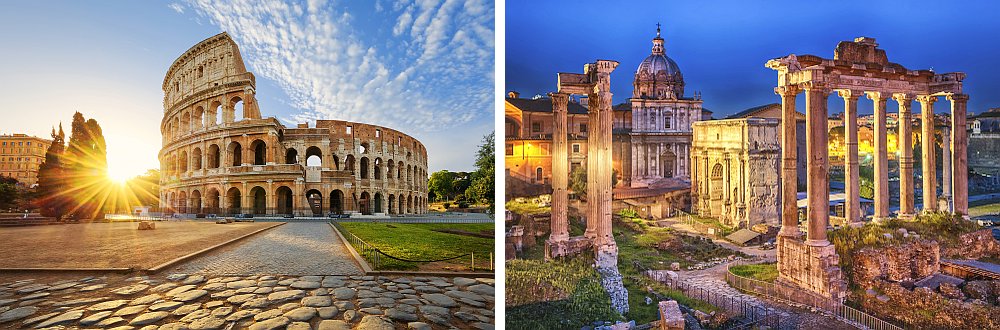
When you step onto the cobblestones of Via del Portico d’Ottavia in Rome, you are not just walking through another picturesque Italian street; you are tracing the footsteps of the oldest continuous Jewish community in Europe. For the mature traveler, navigating Italy’s deep Jewish heritage offers a profound and deeply moving experience. It is a journey that requires a slightly slower pace, an appreciation for the layers of history beneath your feet, and, of course, a love for incredible food. Exploring Jewish Italy—specifically Rome and Venice—is not about rushing from one monument to the next. It is about savoring the atmosphere, understanding the resilience of the communities that thrived here against all odds, and enjoying the modern conveniences that make a kosher European vacation entirely comfortable. The Rhythm of Rome’s Jewish Quarter Rome’s Jewish story predates the destruction of the Second Temple, but the physical heart of the community remains the Roman Ghetto. Established in 1555 by papal decree, this small, flood-prone area next to the Tiber River was where Jews were confined for over three centuries. Today, it has transformed into one of the most vibrant, sought-after, and decidedly kosher neighborhoods in the city. For older adults, the Ghetto is wonderfully accessible. Unlike the steep hills of other Roman neighborhoods, the area immediately surrounding the Great Synagogue (Tempio Maggiore) is relatively flat and pedestrian-friendly. The synagogue itself is an architectural marvel. Built in 1904 after the Ghetto walls were finally torn down, its distinct square dome was designed to be seen from anywhere in the city—a proud declaration of freedom. The Jewish Museum located in the basement is a must-visit, offering a quiet, climate-controlled space to view exquisite textiles and silver rescued from the original, cramped ghetto synagogues. But history here is best digested alongside the local cuisine. Roman Jewish food is a distinct culinary tradition, separate from both classic Italian and traditional Ashkenazi or Sephardic fare. You simply cannot visit without sitting at an outdoor table at Ba’Ghetto or Nonna Betta to try carciofi alla giudia—Jewish-style artichokes. These whole artichokes are seasoned and deep-fried twice until the leaves splay out like golden, crispy sunflowers, while the heart remains tender and warm. Paired with a glass of local kosher wine, a leisurely two-hour lunch here allows you to rest your feet while absorbing the lively Hebrew and Italian chatter echoing down the street. Echoes of Antiquity Beyond the Ghetto Venturing slightly beyond the Jewish Quarter brings you face-to-face with the complex relationship between Rome and the Jewish people. The Colosseum, built largely with the spoils of the Jewish War and the labor of Jewish captives, stands as a stark reminder of the past. Nearby is the Arch of Titus, depicting the Romans carrying the Menorah away from the burning Temple in Jerusalem. For generations, Roman Jews refused to walk under this arch. It was only in 1948, upon the declaration of the State of Israel, that the community proudly marched backwards through the arch to symbolize their enduring survival. Traveler’s tip: Rome is famously unforgiving on the knees. Instead of booking a standard three-hour walking tour under the hot sun, consider hiring a private golf cart tour. These small, quiet vehicles can navigate the narrow alleys, taking you directly to the Colosseum, the Arch of Titus, and the Pantheon without the physical exhaustion of walking miles over uneven cobblestones. The Origins of the Ghetto in Venice A scenic high-speed train ride north brings you to a city that feels like stepping into a painting. Venice is a place of canals, gondolas, and striking architecture, but it also holds a major piece of Jewish history: the very first Ghetto. In 1516, the Venetian Republic decreed that all Jews must live on a small, segregated island in the Cannaregio district. Because the site was previously a copper foundry, the Venetian word for casting—geto—was eventually corrupted into “ghetto,” giving the world a term that would echo through history. The Venetian Ghetto is divided into the Ghetto Nuovo (the New Ghetto, which is paradoxically the oldest part) and the Ghetto Vecchio (the Old Ghetto). What makes this area fascinating is the architecture. Because Jews were not allowed to expand outward, they built upward. The buildings here are some of the tallest in Venice, originally housing distinct communities of German, Italian, Levantine, and Spanish Jews. Behind unassuming, plain exteriors hide five spectacular, ornate synagogues. Guided tours (which involve some stairs) reveal breathtaking interiors adorned with gold leaf, intricate woodwork, and stunning chandeliers. Because the steps can be steep, it is wise to pace yourself and perhaps focus on the two accessible ground-level exhibits if mobility is a concern. Shabbat on the Canals Experiencing Shabbat in Venice is nothing short of magical. The local Chabad, centrally located in the Ghetto, operates the famed Gam Gam restaurant at the entrance to the Cannaregio canal. On Friday nights, the sound of traditional Shabbat songs drifts out over the water, blending with the splash of passing boats. Logistically, Venice requires some planning for the mature traveler. The city is connected by hundreds of bridges, most of which have stairs. To make your trip enjoyable and Shabbat-compliant without exhaustion, book a hotel situated directly within or immediately adjacent to the Ghetto. This minimizes walking on Shabbat and keeps you close to the kosher bakeries and restaurants. When arriving with luggage from the train station or airport, skip the crowded vaporetto (public water bus) and treat yourself to a private motoscafi (water taxi). They can bring you much closer to your hotel without the need to drag heavy suitcases over multiple stepped bridges. Italy’s Jewish history isn’t just found in dusty museums or history books; it is lived in the streets, tasted in the food, and heard in the timeless melodies of Shabbat. By taking your time, prioritizing comfort, and knowing where to look, a kosher tour to Rome and Venice becomes far more than a vacation—it becomes a luxurious, deeply personal homecoming.