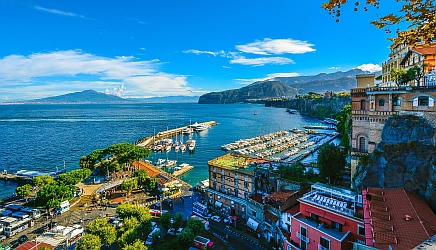
The Timeless Beauty of Italy‘s Amalfi Coast A tour along the Amalfi Coast leaves a lasting impression on the mind, heart, and soul. The landscapes are breathtaking, a perfect harmony of land and sea that feels almost otherworldly in its beauty. The region’s history adds depth and richness to the experience, a reminder that this place has a story to tell. The atmosphere, with its warm light and soothing sounds, creates a sense of peace and contentment that is hard to find elsewhere. The culture, focusing on community, tradition, and life’s simple pleasures, is a reminder of what truly matters. But more than anything, the feeling of the Amalfi Coast stays with us – a sense of being connected to something timeless, something greater than ourselves. It is a place where the beauty of the natural world and the richness of human culture come together in perfect harmony, creating a truly unforgettable destination. As we leave the coast behind, we carry with us memories and a piece of the Amalfi Coast in our hearts. The landscapes, the history, the atmosphere, the culture – all of it has become a part of our own story. And we know that the Amalfi Coast will always hold a special place in our hearts no matter where our travels take us. The Coastal Dream: Where Land Meets the Sea The Amalfi Coast is one of those rare places where the natural world seems to have conspired to create a scene of unparalleled beauty. This stretch of coastline, nestled in the heart of Italy’s Campania region, extends from the Gulf of Naples to the Gulf of Salerno, offering a dramatic interplay of land and sea that leaves even the most seasoned travelers in awe. As we approach the coast, the road begins to wind, curving along cliffs that plunge dramatically into the azure waters of the Tyrrhenian Sea. The air is tinged with the scent of the Mediterranean – salty, warm, and invigorating. Here, the landscapes are the stars, and each turn in the road reveals a new vista more breathtaking than the last. The mountains rise steeply from the sea, their slopes dotted with terraced vineyards, olive groves, and citrus orchards. The jagged cliffs are softened by a lush green blanket, while the sea below shimmers in shades of blue and green, constantly shifting with the play of sunlight. Villages cling to the cliffs, their pastel-colored houses seeming to defy gravity as they cascade down towards the water’s edge. It is a landscape that feels timeless and eternal, as if it has existed in this perfect harmony for centuries, untouched by time. Echoes of the Past: A Tapestry of History Traveling along the Amalfi Coast is a journey through layers of history, each adding depth and richness to the experience. The region’s history is as tumultuous as the sea that borders it, with civilizations rising and falling, each leaving traces of their presence. The ancient Romans were among the first to recognize the allure of this coastline, and their influence can still be felt today. The ruins of Roman villas, with their intricate mosaics and grand columns, whisper of a time when this coast was a retreat for the wealthy elite, a place to escape the heat and chaos of Rome. As we explore these remnants, it’s easy to imagine the grandeur of those ancient days, the parties and feasts that once took place in these now-quiet ruins. The medieval period brought a new wave of prosperity to the Amalfi Coast, as the town of Amalfi itself became a powerful maritime republic. Amalfi’s strategic position made it a hub of trade and commerce, connecting the Mediterranean with the East. The town’s influence spread far beyond its shores, and its wealth is still visible in the grand cathedrals and ornate architecture that dot the coast. The Duomo di Sant’Andrea, with its stunning façade and soaring bell tower, stands as a testament to the town’s glorious past. Throughout the centuries, the Amalfi Coast has seen waves of invaders, from the Saracens to the Normans, each leaving their mark on the culture and architecture. The influence of these various cultures is woven into the region’s fabric, creating a rich tapestry that tells the story of a place that the ebb and flow of history has shaped. Jewish History Along the Amalfi Coast Jewish history along the Amalfi Coast is a rich and often overlooked chapter in Italy’s broader narrative of Jewish life, making the kosher Amalfi Coast tour even more splendid. This history is intertwined with the region’s development as a significant center of trade and culture during the Middle Ages. The Amalfi Coast, with its strategic location along critical maritime routes, became a prominent hub of commerce in the Mediterranean during the 10th and 11th centuries. The town of Amalfi itself rose to prominence as a powerful maritime republic, establishing trade connections with the Byzantine Empire, North Africa, and the Middle East. This flourishing trade attracted a diverse population, including Jewish merchants and traders who played a vital role in the region’s economic life. The Jewish community in Amalfi was small but influential, contributing to the local economy and cultural life. Jewish merchants were mainly involved in the trade of textiles, spices, and other luxury goods, acting as intermediaries between the Christian and Muslim worlds. Their linguistic skills, knowledge of different cultures, and established networks made them valuable players in the complex web of Mediterranean trade. Beyond commerce, Jews in Amalfi also contributed to the intellectual and cultural life of the region. Jewish scholars and physicians were known for their expertise and some held positions of influence in the courts of local rulers. The cultural exchange between Jews and other communities in Amalfi was part of a broader pattern of interaction that characterized Jewish life in southern Italy during this period. Jewish scholars in the region were instrumental in translating scientific and philosophical texts from Arabic into Latin and Hebrew, helping to transmit knowledge from the Islamic world to Christian Europe. However, the fortunes of the Jewish community in Amalfi, like those in other parts of medieval Europe, were subject to the ebb and flow of political and social changes. The Norman conquest of southern Italy in the late 11th century brought new rulers and new challenges for the Jewish population. While the Normans were generally tolerant of Jews, granting them certain rights and protections, they also imposed taxes and restrictions that affected their economic activities. The decline of Amalfi as a significant maritime power in the 12th century, coupled with the rise of competing cities like Pisa and Genoa, further impacted the Jewish community. As Amalfi’s political and economic influence waned, so did its Jewish population, which gradually diminished in size and importance. By the 15th century, the Jewish presence in the Amalfi Coast had faded, as Jews faced increasing pressure from the Catholic Church and the growing power of the Spanish Inquisition, which extended its reach into southern Italy after the Spanish conquest of Naples in 1503. Many Jews were forced to convert to Christianity, flee, or live as “Crypto-Jews,” practicing their faith in secret. While the physical traces of Jewish life along the Amalfi Coast have largely disappeared, the legacy of this community lives on in the cultural and economic history of the region. The contributions of Jewish merchants, scholars, and artisans to Amalfi’s prosperity and intellectual life during its golden age remain a testament to the enduring presence and influence of Jews in this corner of Italy. The Atmosphere of the Amalfi Coast: A Sensory Symphony There is something almost magical about the atmosphere of the Amalfi Coast, a quality that transcends its physical beauty and touches the soul. It is a place where time seems to slow down, where the pace of life is dictated not by the rush of modernity but by the rhythms of nature and tradition. As we wander through the narrow streets of the coastal villages, we are enveloped by the warm, golden light that bathes the region in a soft glow. The buildings, with their weathered facades and vibrant shutters, seem to bask in the sunlight, each telling its own story. The scent of lemons fills the air, mingling with the salty tang of the sea, creating a heady perfume uniquely Amalfitano. The sounds of the coast are a symphony in themselves. The distant crash of waves against the cliffs is the constant backdrop, a reminder of the power of the sea. Above it all, the calls of seabirds echo through the air, their cries mingling with the laughter of children playing in the squares and the chatter of locals going about their day. The occasional hum of a Vespa adds a modern note to this timeless melody, but it never overwhelms the natural sounds that define the coast. Even the light here seems different, softer, and golden as if this place enchants the sun. Sunsets are a daily spectacle, with the sky igniting in a blaze of oranges, pinks, and purples, casting a warm glow over the landscape. As night falls, the villages twinkle like jewels against the darkened cliffs, and the stars above shine with a clarity that is rarely seen elsewhere. Cultural Riches: The Heart and Soul of the Amalfi Coast The true essence of the Amalfi Coast lies not just in its landscapes or history but in its culture – a culture deeply rooted in the land, the sea, and the traditions passed down through generations. This is a place where life is filled with passion and joy, where every meal, celebration, and simple moment is infused with a sense of la dolce vita. Food is central to the culture of the Amalfi Coast, and every dish tells a story of the land and the people who live here. The cuisine is simple yet flavorful, emphasizing fresh, local ingredients. Lemons, the region’s most famous produce, are used in everything from limoncello to pasta sauces, and their bright, tangy flavor reflects the sunny coast where they are grown. The seafood, caught fresh from the sea each day, is another staple, prepared in ways that highlight its natural flavors. However, the culture of the Amalfi Coast is not just about food; it is also about art, music, and tradition. The region has a long history of craftsmanship, which is evident in the intricate ceramics made here. Each piece, whether a delicate plate or a bold tile, is a work of art, hand-painted with vibrant colors and elaborate designs that reflect the coast’s beauty. Music is another essential part of life here, filling the air wherever we go. From the lively tarantellas that are danced in the squares to the soulful strains of a mandolin being played in a quiet corner, music is woven into the fabric of the Amalfi Coast. It is a reminder of the region’s rich cultural heritage, which is still alive today. The Villages: Hidden Gems of the Coast While the landscapes and culture of the Amalfi Coast are undoubtedly its biggest draws, the villages genuinely capture the heart. Each one has its unique charm and story to tell, and as we explore them, we find ourselves falling deeper in love with this enchanting region. Positano is perhaps the most famous of the coastal villages, and it is easy to see why. As we approach it, the village appears to be cascading down the cliffs, a riot of color against the backdrop of the sea. The narrow streets are lined with boutiques and cafes, and a lively, almost bohemian atmosphere is here. Yet, despite its popularity, Positano has managed to retain its charm and sense of place. With its pebbled shores and crystal-clear waters, the beach is a haven for those looking to relax and soak in the coast’s beauty. Further along the coast, we come to Amalfi, the town that gives the coast its name. Amalfi is a place steeped in history, and as we wander through its streets, we can feel the weight of the past. With its striking Arab-Norman architecture, the cathedral dominates the town, symbolizing its former glory. But Amalfi is not just about the past; it is a living, breathing town with a vibrant community and a lively atmosphere. The piazzas are filled with people, both locals and visitors, enjoying the simple pleasures of life – an espresso in the morning, a gelato in the afternoon, and a stroll along the waterfront in the evening. Ravello, perched high above the coast, offers a different perspective. This is a place of tranquility, where the views are nothing short of spectacular. The gardens of Villa Cimbrone and Villa Rufolo are the highlight here, with their terraces offering sweeping views of the coastline below. As we wander through the gardens, it is easy to see why artists and writers have been drawn to Ravello for centuries – a sense of peace here, a quiet beauty that soothes the soul. Each village along the Amalfi Coast has its own character and story to tell. From the fishing village of Cetara, known for its anchovies, to the bustling town of Sorrento, with its lively piazzas and lemon groves, there is something to discover around every corner. As we explore these villages, we see the Amalfi Coast and experience it, becoming a part of its story. Southern Italy, Amalfi Coast Adventure – 8 Days Recognized by UNESCO as a prime example of Mediterranean beauty, the Amalfi Coast is one of Italy’s most captivating destinations. Here, towering mountains dramatically descend into the sea, creating a stunning vertical panorama of jagged cliffs, cliffside homes, and verdant woodlands. The coast’s renowned towns form a constellation of iconic destinations. With its pastel-colored buildings, Positano is a vibrant mix of chic boutiques, fashionable visitors, and sun-soaked beaches. To the east, the historic town of Amalfi enchants with its striking Arab-Norman cathedral. Above, Ravello captures the imagination with its elegant villas and deep-rooted ties to musicians and writers of bygone eras. To the west lies the romantic town of Sorrento, the gateway to the Amalfi Coast, perched on cliffs that offer breathtaking views of the Bay of Naples and Mt. Vesuvius. In addition to its stunning seas and postcard-perfect squares, the region boasts some of Italy’s most exquisite hotels and restaurants. Indulge in luxurious accommodations, splendid kosher cuisine, and the most coveted destination in Italy. What could be more perfect? The Amalfi Coast is a land within a country where every city, town, and beach is a beautiful, exciting, impressive, and fascinating destination for a trip. See “Enchanting Italy,” an 11-day tour to Italy >